Bringing hospital-level care closer to home
Airedale’s Digital Care Hub is bringing together technology, clinical expertise and integrated working to help more people receive safe, responsive and personalised care at home.
Rachel Binks
Clinical Director, Out of Hospital Care,
Airedale NHS Foundation Trust
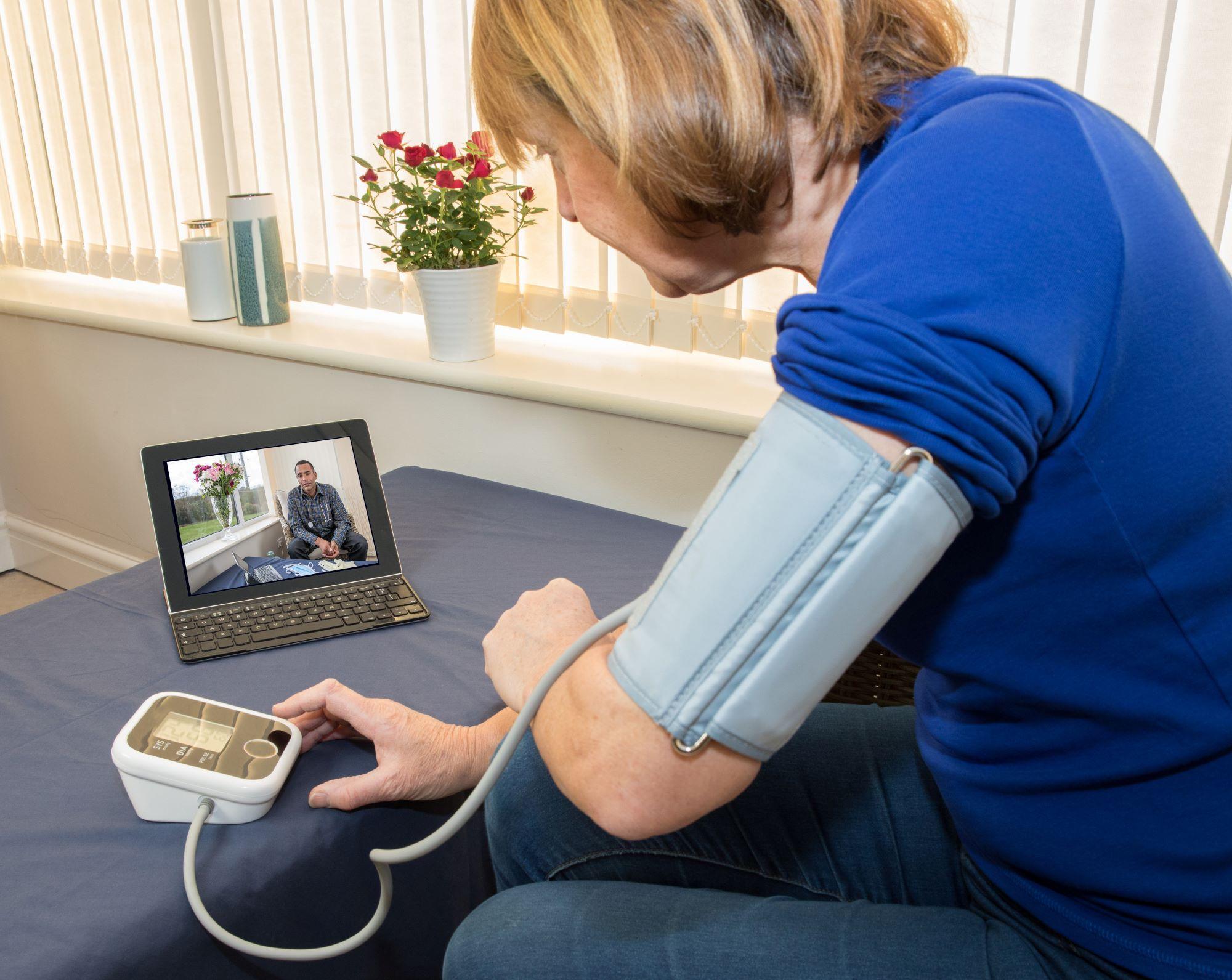
Receiving care at home is about more than convenience. It can help people remain independent, avoid the disruption of an unnecessary hospital visit and stay connected to the people and surroundings that matter to them.
That is the principle underpinning the services delivered from our Digital Care Hub at Airedale.
Since 2011, we have harnessed technology to provide safe, responsive and proactive clinical care to people in their own homes, 24 hours a day, seven days a week.
The technology matters, but I see it as only one part of the model. At its heart is rapid access to clinical advice, assessment and reassurance for patients, families, carers and partner professionals.
Our team can identify deterioration earlier, intervene promptly and give clear advice on what to do if symptoms worsen. When further support is needed, we can arrange access to the most appropriate community, primary care, ambulance or hospital service.
The Hub supports a range of pathways, including remote monitoring and virtual wards. Two examples—Immedicare for care homes and Goldline for palliative and end-of-life care—show how the model works in practice.
Supporting people in care homes
Digital care works best when it strengthens the confidence and capability of the people already supporting a patient. Through Immedicare, delivered via our joint venture with Involve, care home residents and staff have 24-hour video access to registered clinicians. Staff can receive timely advice on assessing and managing complex health needs within the care home, helping to avoid unnecessary calls on primary care, ambulance services and emergency departments.
Data over the last ten years indicates that around 90 per cent of residents remain in their care home following a call to Immedicare. For falls, transport to hospital by ambulance has been shown to be around 15 per cent, compared with approximately 80 per cent in settings without the service.
The aim is to support confident decisions within the care home, while ensuring residents who need ambulance or hospital care can access it promptly.
Coordinating palliative and end-of-life care
Through Goldline, we provide a single point of contact, available 24 hours a day, for people approaching the end of life and for their families and carers.
I believe this model matters because people approaching the end of life can face a fragmented system. Families may not know whom to contact, and professionals may lack immediate access to specialist advice. That uncertainty can lead to hospital admission even when it is not what the person wants.
Our clinicians coordinate advice, support and access to other services, helping people remain in their preferred place of care whenever possible. Reported outcomes include fewer than 20 per cent of Goldline patients dying in hospital, compared with 46 per cent nationally, and a 23 per cent reduction in unplanned admissions. The estimated return is £2 for every £1 invested.
Building a virtual-first future
Our ambition for 2025 to 2030 is to extend the Hub’s role in virtual-first, neighbourhood and hospital-at-home care through broader pathways, simpler referrals and closer integration with teams providing care in person. Virtual first must not mean digital only: appropriate alternatives must remain available for people who cannot access digitally enabled care.
First, we will expand the conditions and patient groups we support. We will also explore care before and after procedures that could improve recovery and reduce unnecessary time in hospital.
Second, we need a consistent referral process for primary care, community teams, Yorkshire Ambulance Service and hospital services. A simpler route into the Hub would support the wider ambition for a single point of access and help professionals connect patients with the services they need.
Third, we need closer integration with urgent community response, collaborative care teams, district nursing and teams delivering in-person care within virtual ward pathways. Remote clinical oversight can help those teams focus hands-on assessment and treatment on patients who need it, while maintaining continuity for people supported remotely.
Keeping people at the centre
As technology and data continue to develop, we will have new opportunities to assess risk, monitor conditions and connect patients with clinical teams.
People have different levels of access, confidence and ability when using technology. Designing services around those differences is essential if digitally enabled care is to avoid reinforcing existing inequalities.
We therefore need to monitor access and outcomes, design services around different levels of digital confidence and maintain appropriate alternatives so that digital exclusion does not become a barrier to care.
Blending care around each person
We will judge success in three areas: reducing avoidable ambulance transport, emergency department attendance and unplanned admissions while enabling earlier supported discharge; improving patient confidence, achievement of preferred place of care and the experiences of staff and partners; and ensuring equitable access to digitally enabled services.
Our purpose will remain clear: to provide safe, personalised and coordinated care, using technology to strengthen rather than replace clinical relationships.
Through partnership, evaluation and continuous improvement, we can sustain that approach. The future is not a choice between digital and face-to-face care, but a blend of both around each person’s needs.