Getting the best from NHS groups
With clinically-led service strategy and clear direction, the group model remains a valuable option within the diverse NHS landscape, write Sir David Dalton.

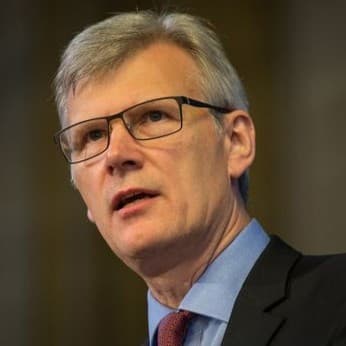
Sir David Dalton
Senior Adviser,
Association of NHS Groups
With the recent break-up of some groups, it might seem that the group model has run its course. However, the strategic case for scale remains strong in the right circumstances.
Groups and shared leadership arrangements unite sovereign organisations around a common purpose. Their joint committees or committees-in-common can be complex but often provide a faster and less costly alternative to merger. The group concept can also apply to a single large trust operating across several sites.
But a group is only one way to operate at scale. It should be neither promoted nor dismissed as an end in itself. There is no single right way to configure NHS organisations - the best solutions reflect local circumstances and while models range from very small to very large, what matters is whether the chosen form serves a clear purpose and enables improvement.
Harsh truths
It’s a harsh truth that healthcare organisations do not serve every population as well as they should. A local hospital may lack the workforce or infrastructure needed to sustain a service, while inefficient use of resources can restrict access and outcomes. The NHS has long responded by consolidating specialist services in regional centres. More recently, cancer and stroke pathways have been redesigned around fewer centres serving larger populations.
Individual organisations may protect their own interests when they fear losing services, status or resources. Without binding collective decisions, local resistance can delay improvements for years and leave populations with sub-optimal services and outcomes.
It’s also true that the NHS also tolerates too much variation. Some organisations are less able to adopt new technologies, care pathways or protocols. Fewer strategic decision-makers, acting collectively, should make it easier to reduce unwarranted differences in provision and outcomes.
Provider collaboratives were intended to address this, but many lacked binding collective decision-making. Trusts could appear to support change while retaining an effective veto when difficult choices arose. Shared or single leadership across organisations can overcome that weakness.
Why, then, have some groups struggled to deliver their intentions?
Lessons learned
First, some failed to establish a compelling purpose or strategic direction. Staff in constituent hospitals could not see what the group would improve that the previous organisations could not achieve alone.
Second, operational and financial pressures overwhelmed groups that retained too many decisions at the centre. They created larger organisations without distributing power and responsibility to strong local teams. Inadequate attention to the operating model, governance, assurance and risk management weakened accountability and contributed, in some cases, to poorer performance.
Third, some groups devoted too much effort to structural and process change and too little to a small number of investment priorities and transformational programmes. Momentum stalled, standardisation was delayed, and value at scale was not realised. Where clinical leaders were not engaged early, insufficient attention to the human and behavioural dimensions of change alienated people whose support was essential.
Several lessons follow.
First, form must follow function. Successful groups are anchored in a clinically-led service strategy that provides a clear direction. Scale is not the objective; it is an enabler that brings coherence to services delivered across multiple sites.
Second, strategic leadership and decision-making must be separated from operational management. Power should be devolved to site or subsidiary teams responsible for delivery. Strong groups reinforce local leadership, define accountability clearly and escalate only the issues that pose the greatest risk to the annual plan.
Third, responsibility for services across multiple locations must be explicit. Services may be managed by each site, delivered on several sites under one site leadership team, or centralised under a designated site. These arrangements can appear complex, but clarity of responsibility distinguishes stronger groups. Clinical practice and reliability networks spanning sites can then standardise care around best practice.
Groups can reduce unwarranted variation through standardisation and reliable implementation of the best care pathways and protocols. Although the evidence base remains limited, groups and shared-leadership organisations are already spreading new technologies through common procurement and improvement methods more quickly than smaller sovereign organisations could do alone.
Clarity of leadership
Groups are not created as a structural end in themselves, they are a means to support improvement to population health. Not only can they deliver better outcomes, they are ideally positioned to offer clarity of leadership to the development of integrated health solutions across localities in the country’s regions. The geographic scale of groups offers strong strategic leadership working with mayoralties and local government colleagues enabling coherent, local integrated service development and delivery.
Similarly, organisational scale offers opportunities for developing meaningful engagement with industry and external partners who are more willing to commit time and resources to product and service development to an NHS partner with extensive infrastructure to test, trial and procure products and services.
The best NHS leaders do not simply administer the status quo, they identify the strategic changes and improvements that matter, then use structure, governance and wider organisational design to deliver them.
Groups will not suit every location, but they remain a valuable option within the diverse NHS landscape. Their success depends on clear purpose, clinically-led strategy, binding decisions, disciplined focus, devolved operational leadership, explicit accountability and sustained attention to people and change.
Sir David Dalton is senior adviser to the Association of NHS Groups, which is hosted by the NHS Alliance.