
Targets and trade-offs: NHS finance and performance ambitions in 2026/27
The picture in 2025/26
Survey respondents and the finance directors we interviewed were clear that 2025/26 was one of the most challenging financial years in recent times, with trusts and systems needing to make difficult trade-offs to deliver record efficiency savings.
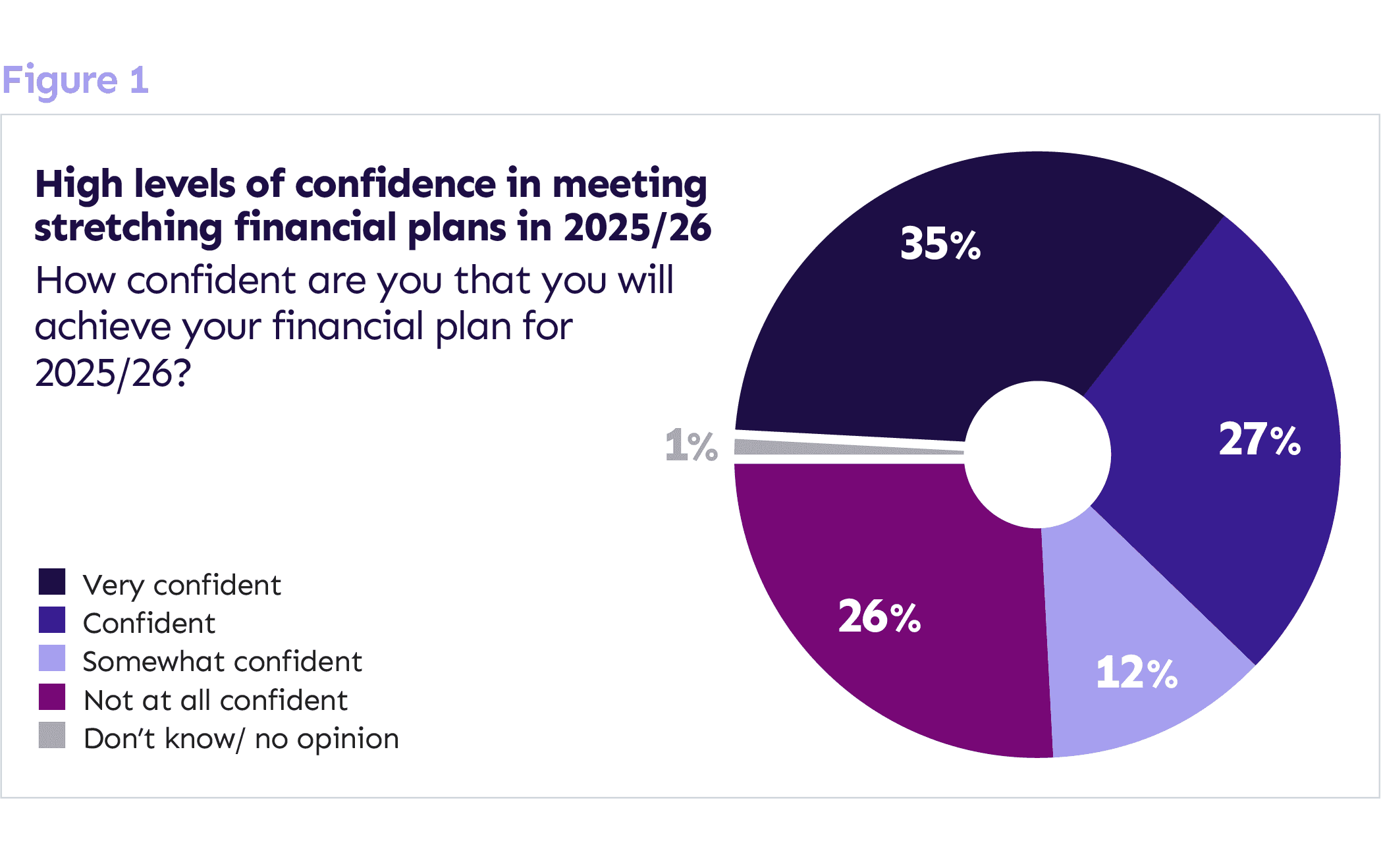
Despite the challenge, many reported that their organisations expected to
meet their financial plans at the time of our survey in March. While a quarter of trust and ICB respondents felt ‘not at all confident’ they would meet their financial plan for 2025/26, 62 per cent felt either ‘confident’ or ‘very confident’ they would.
However, many finance directors reported that a large portion of their savings targets were likely to be met via non-recurrent measures, such as technical accounting adjustments, non-recurrent income or through one-off savings. They expressed concern that, despite encouraging headline figures, underlying financial performance was not improving at the pace expected by NHS England, with issues being deferred rather than resolved, exacerbating the challenge for 2026/27.
For survey respondents, rising demand ranked high among risks to derailing financial plans: 86 per cent* [2] of respondents to the trust and ICB survey cited demand as a barrier to delivering care while meeting financial plans.
“Very out-of-date service specifications [mean] that funding in no way matches demand and services being delivered.”
NHS trust/foundation trust
Interviews with finance directors also identified concerns about how rising demand for mental health and community services will be evidenced with existing datasets.
Mental health respondents raised concerns about demand. That was the case for GP respondents too, with several comments received in free-text questions. For example, on reflecting on what was difficult in 2025/26, a primary care network (PCN) clinical director noted the “sheer volume of demand and insufficient funds and estates to increase staffing number to meet this.” A PCN digital transformation leader said, “It is difficult within primary care, the cuts to budget means more pressure on staff with no let up from patients.”
Footnote
[2] When a figure is marked with an asterisk, it means that respondents who replied “not applicable/ no opinion” were removed from overall percentage calculations.