Targets and trade-offs: NHS finance and performance ambitions in 2026/27
The three shifts
The core purpose of the government’s 10 Year Health Plan is to transform and modernise the NHS through three shifts: from hospital to community; from treatment to prevention; and from analogue to digital. Local NHS leaders largely support these ambitions but fear the primary focus on recovering services and balancing the books will slow progress.
More specifically, trust finance directors told us they feel this ambition is not yet supported by the financial framework, while much of the focus to date from national leaders has been on delivering constitutional standards.
Impact of previous financial plans
In our survey, we asked about the impact of the measures that were taken to achieve financial plans in 2025/26 on the three shifts. For both sickness to prevention and hospital to community, more trust and ICB respondents* said the impact had been more negative than positive. This is particularly pronounced for sickness to prevention, where 40 per cent* found it to have had a negative impact with the converse true for just 7 per cent*.
Reflecting on what was difficult in 2025/26, one respondent highlighted
“difficulties in shifting funding to support the three shifts while trying to
ensure financial break even and future sustainability“(head of strategy, ICB).
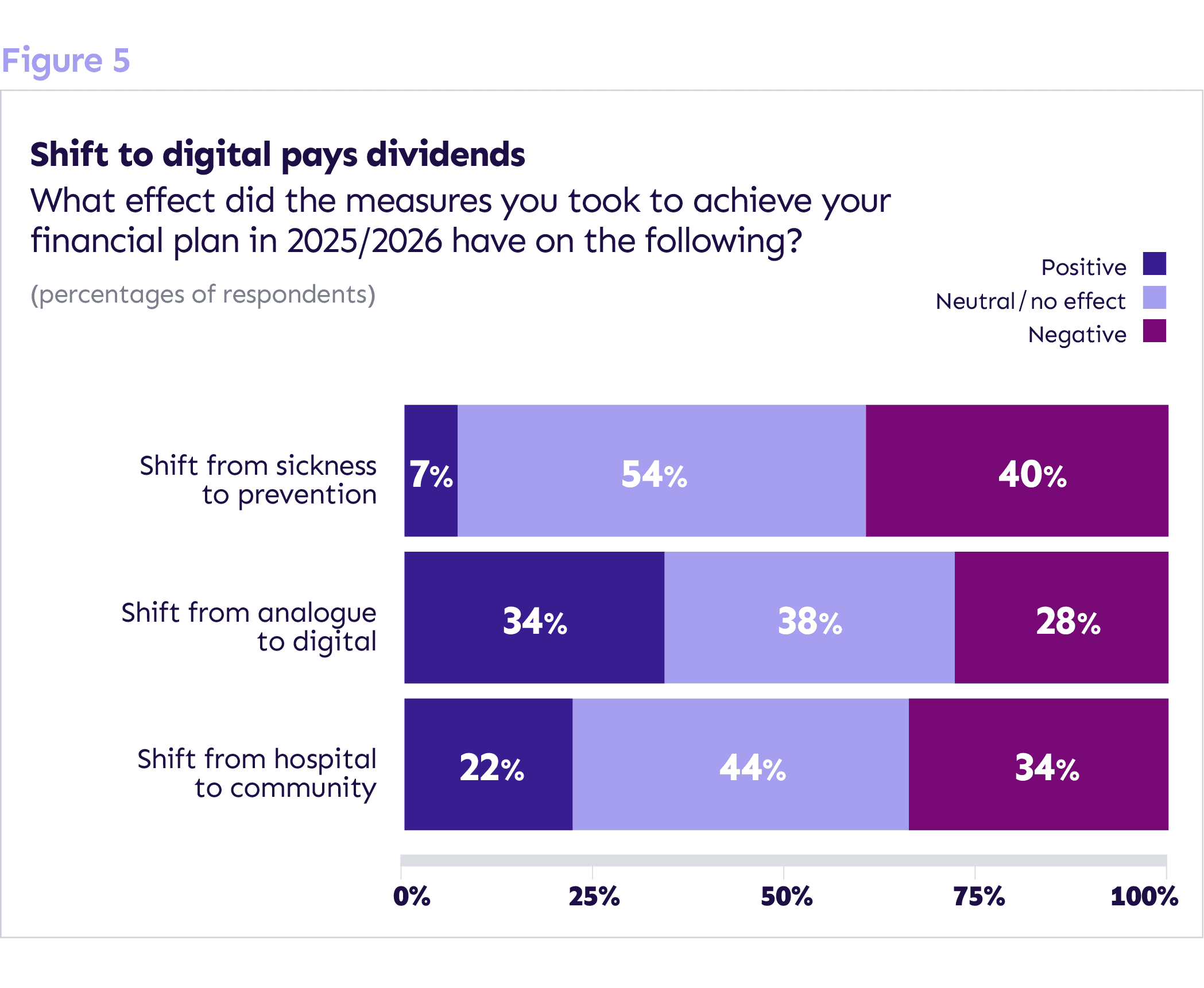
However, a larger proportion of respondents found that the impact on
analogue to digital had been positive (34 per cent* compared with 28
per cent*).
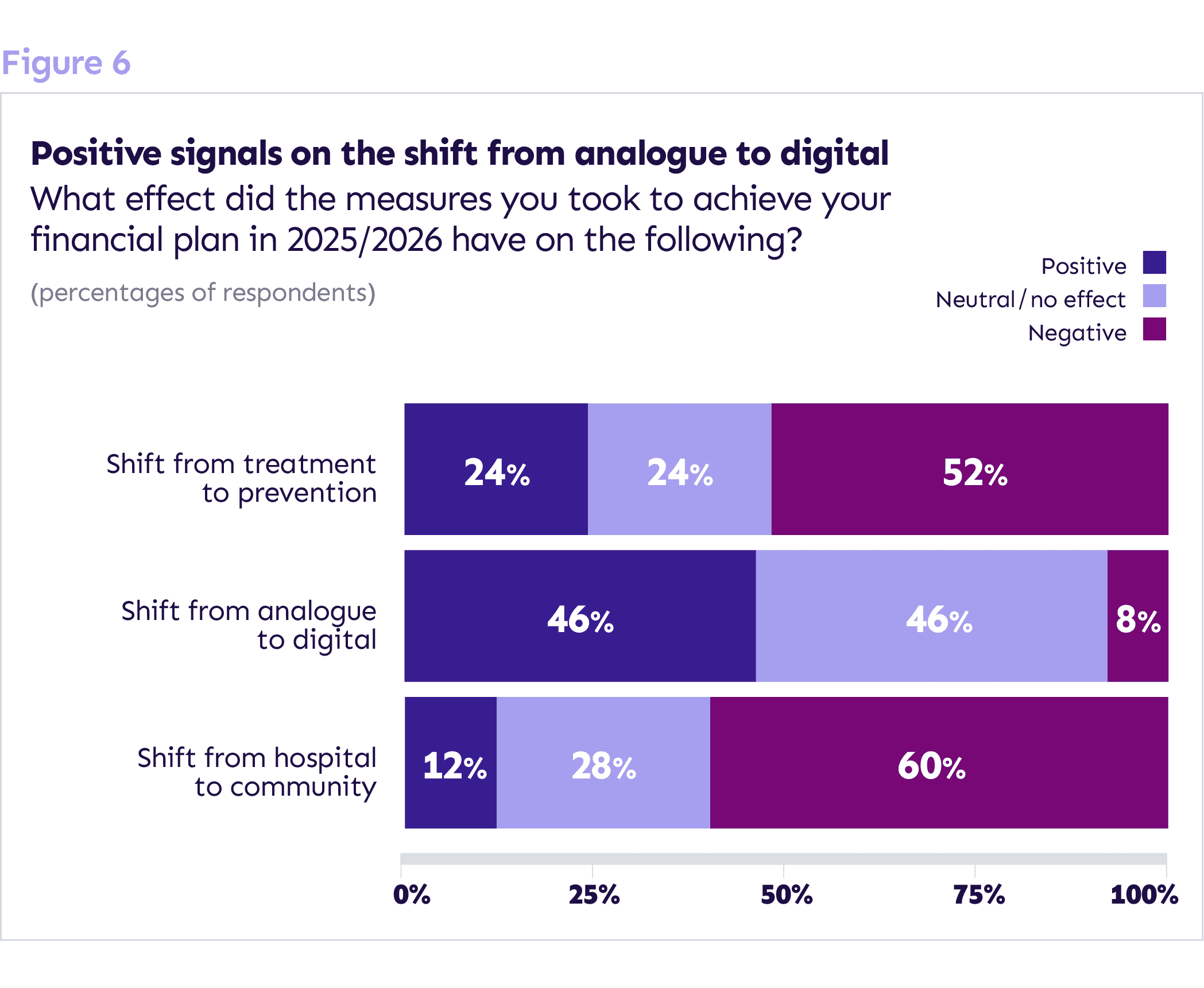
GP respondents suggested that hospital to community had been more
negatively impacted than the other shifts, with 60 per cent* saying the
impact was negative, compared with 12 per cent* saying positive. A
PCN clinical director highlighted that focusing on on-the-day treatment
contradicted the sickness to prevention shift:
"Unlimited on-the-day routine and ‘urgent’ access to general practice
without significant financial support will lead to increased loss of
continuity and a reduction in long-term condition management,
which in turn will increase demand in secondary care. This does not
fit with the 10 Year Health Plan to shift from sickness to prevention." PCN Clinical Director
Similarly to ICB and trust respondents, analogue to digital was more positively impacted, with 46 per cent* of GP respondents saying the measures had been positive compared with 8 per cent* who said negative.
Future progress on the three shifts
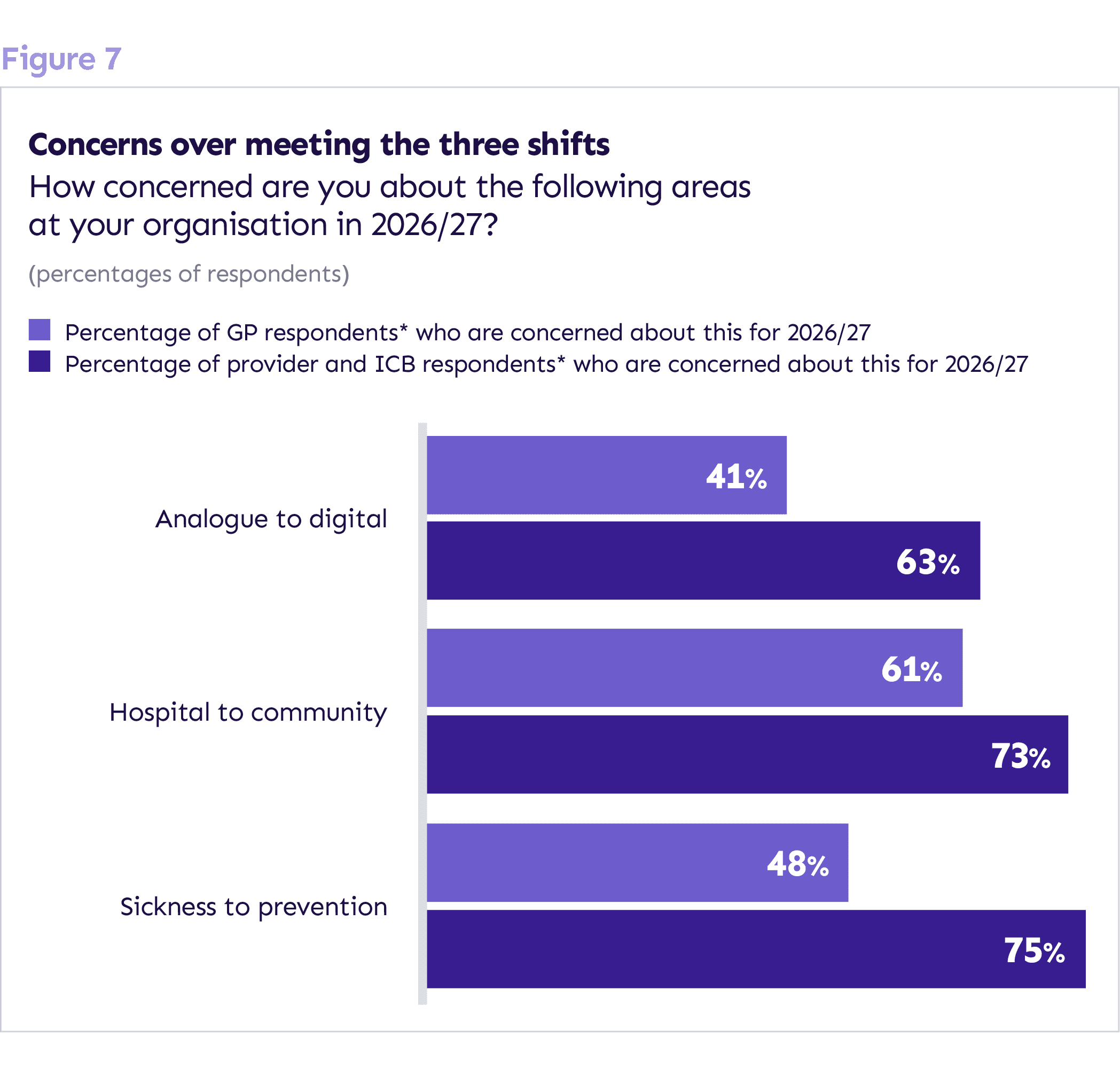
Respondents across both surveys indicated that measures to ensure financial sustainability are delaying and hindering the service’s ability to deliver the three shifts at pace. This was a particular concern among trust and ICB respondents.
However, some GP respondents specified that they would like support from the government in 2026/27, calling for “clear guidance to system partners about how they must effect left shift” (chair, GP federation and provider collaborative) and “changes in contracts and financial flows” to support the shift (chief executive, GP federation and provider collaborative).
The priority and focus on hospital to community (and neighbourhood health) continues to vary – this needs to be clear, consistent and sustained.
NHS trust/foundation trust