Visit to Royal Free London NHS Foundation Trust
Daniel Elkeles visits Royal Free London NHS Foundation Trust to see a trust absolutely determined to do the very best for the people of north central London.
Earlier this week our chief executive Daniel Elkeles visited Royal Free Hospital to see a trust absolutely determined to do the very best for the people of north central London.
Part of the Royal Free London group, their mission is to combine world class expertise with tailored local care to the five London boroughs they serve. The trust's merger with North Middlesex University Hospital and its community services earlier this year is also bringing that ambition to the people of Enfield and Harringay. The same can be said for the populations that use Barnet Hospital, Chase Farm Hospital and the Royal Free Hospital.
As part of the organisation's new clinical strategy these hospitals have all identified their own priorities which reflect the unique health challenges of the communities they care for and the expertise they each bring to the wider group.
In addition, across the whole organisation, the focus is on the three areas which it believes can make the biggest difference to the conditions that impact the largest number of people it serves: cancer; cardiovascular disease; and organ failure.
Daniel said: "I heard about their ever-increasing involvement in neighbourhood and community working, and also spent time with the team at the Royal Free Hospital visiting their cancer services. The trust receives more new cancer referrals than any other in London - on average 183 per day! Their five-year survival outcomes for several tumour types are amongst the best nationally and they are at the leading edge of new cancer treatments, including ‘therognostics’ where clinical oncologists and nuclear medicine consultants jointly deliver treatments that both diagnose and treat cancers in one session using a state-of-the-art advanced PET scanner. Many patients travel from across the UK to benefit from the trust’s expertise in skin cancer, kidney cancer, neuroendocrine tumours and hepatobiliary cancers. And they are rapidly growing their research with around 15,000 patients recruited to new studies in the last 5 years."
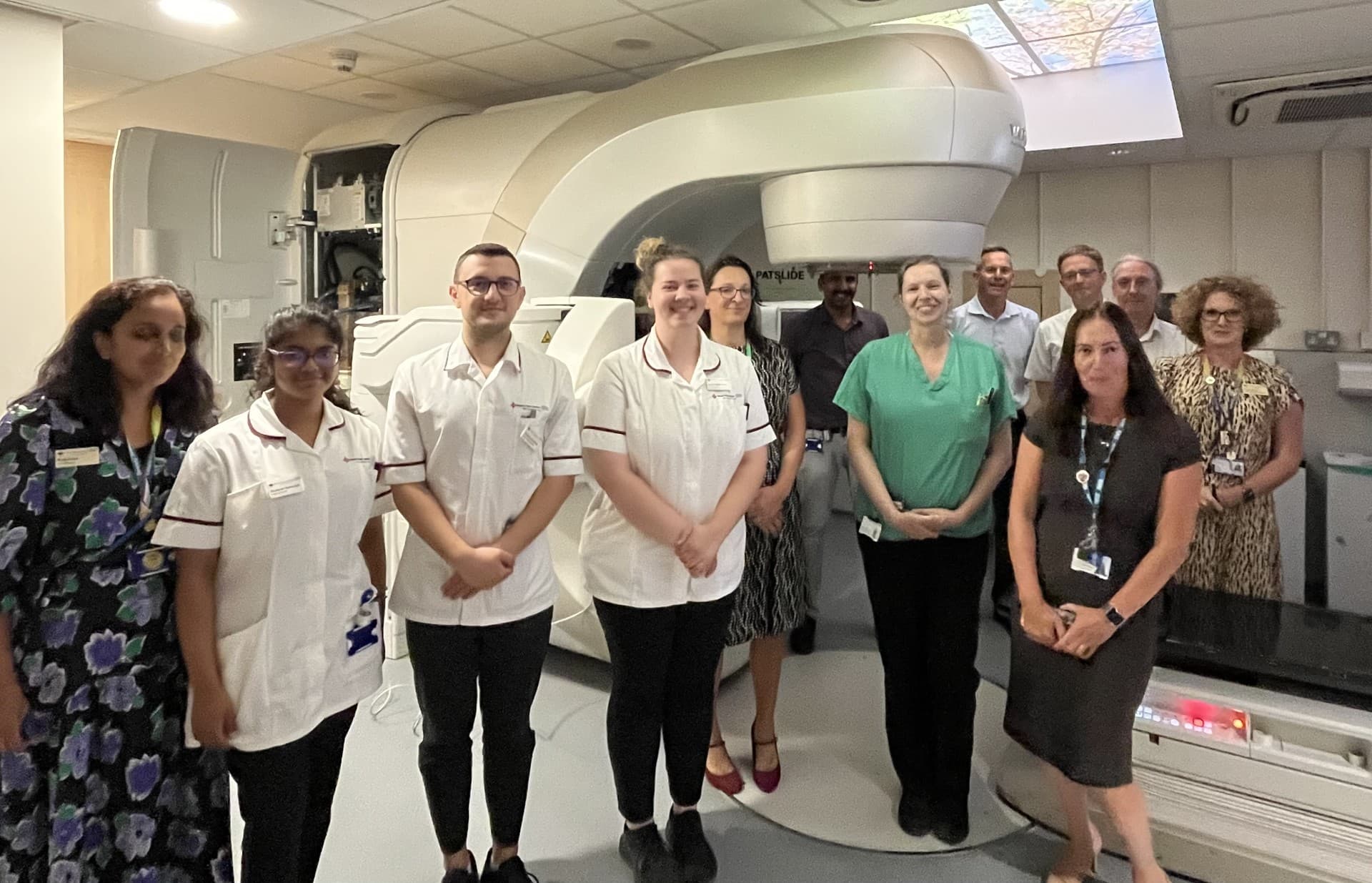
However, there are challenges. The trust hasn’t met the 62-day cancer standard for nine years but are now confident that they will achieve it this year and have already reduced the volume of patients waiting over 62 days from over 900 to less than 300 in the last 9 months. To achieve this, they launched a Cancer Improvement Programme in 2024 which has four parts:
- Rigorous focus on the basics including active management of the cancer patient waiting lists.
- Focus on pathway redesign and new models of delivery to achieve the 28-day faster diagnostic standard.
- Specific action plans for each of the main tumour types and pathways.
- Maintaining commitment to deliver the trust's tripartite missions of care, education and research and on maintaining, and enhancing, their international reputation in the cancer world.
"Cancer services are delivered across all of the trust’s main sites – with Chase Farm Hospital and the Community Diagnostic Centre at Finchley Memorial Hospital being focal points for diagnostics. They are keen to secure funding for a new cancer centre, with the support of the Royal Free Charity, to ensure the very best possible co-ordination of services. Growing demand means there will always be a need for more capacity – evidenced ironically by the fact the radiotherapy team I met were eagerly awaiting a spare part to fix one of their linear accelerators.
"At a time when we know the NHS has to fundamentally change the way it delivers care with a shift to more prevention and less hospital-based care, the visit was a great reminder that teaching and tertiary centres have a critical role to play in all aspects of that change – and how when we really align on what is driving our population needs we can make a huge and lasting difference.
"Thank you to Pete, Vicky, Gillian, Julie, Sean, David, Jemma, Laura, Clare and team for a great visit."
- Training

NHS quality for board members
5 February 20279:30 - 16:00Online
What does ‘quality’ mean in the NHS and how can you influence it from the boardroom? This one-day course helps NEDs and board members ask the right questions and support better care outcomes.
Improvement
Leadership
Quality
- Conference
Leading Quality Together Conference 2027
28 January 20279:15 - 16:00In-person
This conference brings together system leaders, quality improvement specialists and operational leads to explore how the Quality Strategy can achieve its ambitions through locally led NHS action.
Improvement
Quality
- Event

Using quality improvement to address inequalities in maternity care
2 December 202610:30 - 12:00Online
This webinar will explore what effective local action can look like in response to racial inequality in maternity and neonatal care.
Improvement
Quality
Race equality
Health inequalities
- Event

Strategic Commissioning Forum
30 November 202615:00 - 16:30Online
Sign up for our Strategic Commissioning Forum and come along to our next event on 30 November.
Commissioning
Leadership
Improvement
- Conference

The NHS and Youth Participation Conference
19 November 202610:00 - 16:00In-person
Delivering the Milburn Review: How the NHS can create opportunity, improve health and strengthen local economies
Health inequalities
Improvement
Leadership
Mental health
Prevention
Workforce
- News
Building on high NHS activity to meet rising demand requires wider change
19 Nov 2026
The Welsh NHS Alliance responds to the latest NHS Wales performance figures.
NHS architecture
Delivery and performance